Here is a link to a NY Times article. It does a good job of explaining how advertising disguised in the form of journalism can be dangerous to the credibility of journalism.
http://www.nytimes.com/2013/09/16/business/media/storytelling-ads-may-be-journalisms-new-peril.html?smid=pl-share
Tuesday, November 26, 2013

Monday, November 25, 2013
Viral Videos, The Future of Investigative Journalism?
Thursday, October 31, 2013
I’m feeling nostalgic …
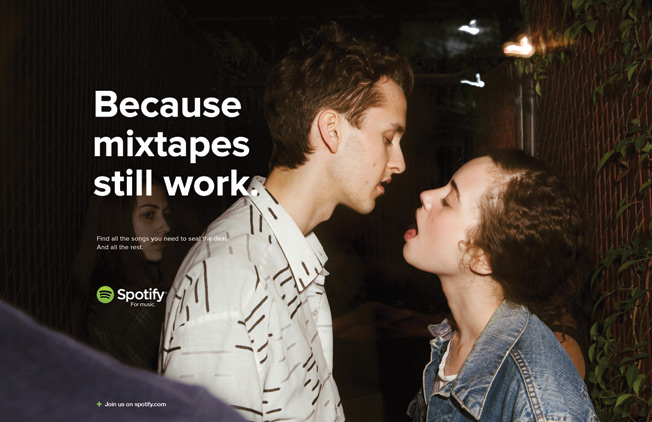 |
| The "high-tech" world using memories of dating and mix tapes! Great! |
But this
may not always be the case, a disadvantage of this kind of marketing could
potentially be the fact that our knowledge and memory are being used against us?!
Memories of the past could also be used to make inflated statements about
products that are no longer as reliable as they were 30 years ago. Or tap into
negative memories of the past thus reinforcing them.
The
only product I imagine nostalgia marketing strategies could be a challenge for
is the high-tech world, which has emerged from modernity. I don’t really see
Apple tapping into this type of marketing….but maybe companies such as Microsoft
could even re visit some of their original campaigns, but I can’t imagine them
having much success.
Wednesday, October 30, 2013
Harley Davidson: A Brand Community

Getting
consumers more involved with a brand means connecting people- connecting people
in a way that creates a brand “community”. Harley Davidson is one of many that have
succeeded in building relationships with those who purchase their products. The
Posse Ride, for example, is one of Haley Davidson’s chief traditions and is
great example of how they create deep connections and memory associations with
their consumers.
There are countless
elements of the Posse ride that enhance the meaning of the Harley brand,
anything from the “passports” riders are handed to checkpoints riders pass
along the way, and most importantly the conversations and memories riders make
with other enthusiasts time and time again. This is what constitutes tradition.
Harley has successfully involved consumers through organized rides, thus
creating meaningful relationships, which we then re-associate with the brand in
the future. Riders [consumers] are connecting themselves not simply to the
brand but also the Harley businesses they stop at along the route. This is such
an imaginative way to connect consumers to brands and distributers. This ritual
is quite meaningful, probably more so to riders than anyone else. Rituals such
as signing the “Posse Oath” also reveal so much about consumer’s values [their
Harleys].
Harley could
always get more involved with their consumer’s culture. I think it would be
wise to say that we can always learn from others. The Harley Posse ride has already
been shaped by consumers into what it needs to be; getting Harley more involved
would only enhance the experience for riders. At times big name brands give off
a vibe as though they are untouchable; whereas a more hands on approach shows
consumers appreciation and is the right thing to do from a moral standpoint.
After all, riders are the ones buying these Harleys; let’s show them some
respect!
Harley is so
well established it seems they don’t even need to worry about increasing
involvement with their brand. It kind of just sells itself. It’s an entire
culture and this will never go away. Now, on the other hand, I also think that
Harley could increase involvement by diversifying themselves. Meaning, they
could do things like make themselves more affordable worldwide. I also think
that Harley has an image that is more rebellious than let’s say a Vespa or a
Prius, and I think this intimidates some. I think “softening” up their image
could be one way to increase or diversify involvement, for a brand that is
already so well established in American culture.
Tuesday, October 15, 2013
Why Products Fail

Like a one hit
wonder, many products are short lived and unsuccessfully launched. Some
products may seem revolutionary, but there is simply no market for it. Remember the
clear Pepsi ads in the 90s? These products flopped because Pepsi failed to read their consumers- who apparently felt there
was no need to change the original Pepsi. Consumers at this point in history felt content with their cola, and apparently did not react well to the new product. Competition is the name of the game,
especially in the monopolized cola industry; Coke and Pepsi have constantly tried to
capture consumer behavior in the form of a beverage. The launch ad for Crystal
Pepsi I have included- speaks volumes.
It’s a risky
endeavor and one can never be sure, what it is these mysterious consumers want-
Especially now that technology has practically given us the keys to everyone’s
hearts. Needless to say Crystal Pepsi’s popularity quickly fizzled (although we
still remember the brand and the product!) Maybe it flopped because it was too much like the original and there was no need for Pepsi to be clear. Or maybe Crystal Pepsi wasn't quite as good as the original, either way there is no room for this product on shelves anymore, only in my memories- of the glorious days we call the early 90s. That being said, I bet relaunching crystal Pepsi might actually work, because today's consumers are looking for something different- and maybe they're sick of seeing the same old Pepsi and are feeling nostalgic. People love to see old products relaunched- if crystal Pepsi relaunched those who never got to try it would want to, and those who once loved it would get to enjoy it again, and those who hated it might have to buy one to remind them of why they didn't like Crystal Pepsi in the first place.
The
flip side to this coin is that the failure of one product, can lead to the
success of another. In 2007, Microsoft disappointed consumers with the popular
and much anticipated launch of Windows Vista. According to Harvard Business
Review, “Vista flopped, and Apple lampooned in an ad campaign 'I’m a Mac',
causing many consumers to believe that Vista had even more problems than it
did”. Wow, you know what? Vista was the last straw that launched me into
becoming an ilover. I’m thinking Microsoft directed the supposed $500 million for
marketing towards the wrong audience and completely failed to read their consumer's behavior. Look out Microsoft; Apple seems to
understand consumers, like parents know when if their kids are lying.

Tuesday, October 1, 2013
How Does Greenpeace Stay Green

My first experience with Greenpeace was seeing them stand outside the Apple stores bombarding people with a clipboard showing traumatizing images of human impacts on Mother Nature. One day, the guilt got to me and I signed up, feeling like a hypocrite considering the fact that I was buying a brand new IPhone and swiping my credit card to contribute money to this cause. Now, I receive emails updating me on the organization; oh and I got a GreenPeace sticker. A few months of automatic withdrawals from my account led me to decided I had done my part and couldn't afford it anymore.
I don't think there are enough advocates for the environment- the first organization I think of is Greenpeace, honestly. Does this mean they have marketed themselves better than other advocates for the planet? Do more advocates for the environment need to stand outside the apple store? This is kind of sad but also a great way to get people's attention, considering the masses that use IPhones.
 ***NEWS*** RUSSIA CHARGES GREENPEACE ACTIVISTS WITH PIRACY Greenpeace is using social media outlets to spread awareness over more than environmental controversies, but to also fight for their activists. They are currently fighting to save imprisoned activists accused of piracy. Their Facebook page, one of their many communication mediums, even includes a post urging people to write to the hostages, the Arctic 30. They are using images, many with short and powerful messages to spread awareness and rally supporters for the causes they believe in; in my opinion they have done a great job doing so.
Greenpeace utilizes all venues when it comes to social media!
Greenpeace on Twitter
Greenpeace on Facebook
Greenpeace on Instagram
Greenpeace on Tmblr
Greenpeace on YouTube
Greenpeace on Pinterest
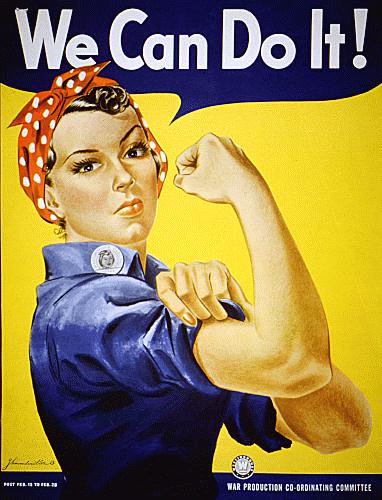
Propaganda Campaigns
I liked what KD George had to say about american propaganda art. He shared some great propaganda images!
Oh, don't we all love how history has a way of repeating itself!
 |
| Shocking example of propaganda images. |
From This.... ....To That


Friday, September 27, 2013
Hilarious..Winner of 2010 Best Ad
This ad was hilarious, I had to share. I was disgusted at first, in hysterics the next. This is a very good example of "clean" humor, the kind of ad that is effective because this speaks to a broad audience (people of all ages), especially since this does not offend. While the shock value of offensive ads is effective, it excludes those who are offended. Advertising holds a mirror to society, and in many ways, has a responsibility to be inclusive.
Sexy Semiotics in Ads
We live
in a "consumer society"- Honestly, what does that even mean? Well, to me it means that
we give mediums such as advertising more power than we should. The heart of the
issue- we don’t see the difference between the imagined future
advertising echoes, and the way things really are. We’re often incapable
of differentiating between our wants versus our needs, and advertising uses
this “against” us!
 |
| Which Bubble Come To Mind?We exist in a culture that thrives off of the production, and subsequent consumption of goods. What we buy is oddly a way we express who we are. We gain our sense of self through our purchases, our belongings, and our use of these commodities- and as consumers, we are losing the power behind our “voice” as we give more and more meanings to our lives (based on the car we drive, the brands we wear, how we style our hair) Thus, we are allowing those things we buy to bring satisfaction to our lives that we believe are somehow lacking. Do we feel this way because of ads? Or do ads use these human weaknesses against us? This feeling of never being good enough, or always wanting more is dangerous. |
I am awed
by American Apparel’s bold campaign- their ads speak to a broad audience, and
offer a sense of belonging to many; but they also seriously push the envelope
in terms of women, nudity, and objectifying their bodies! Advertising makes us
feel as though our wants are our needs…it uses the value we attach to products,
to sell them to us. Ads allow us to believe we can actually obtain what we want
but really can’t have, and American Apparel has mastered this concept. Maybe we
should stop living in a fantasy world and be happy with what we have (oh wait,
I mean, who we are!)
What I love about advertising is that it highlights our human flaws, but
also our strengths and weaknesses. Ads not only mirror ourselves, they reveal
cultural subtleties ,which we then try and pick apart. I enjoy gazing at ads in
attempts to understand how society has evolved.


Subscribe to:
Comments (Atom)